
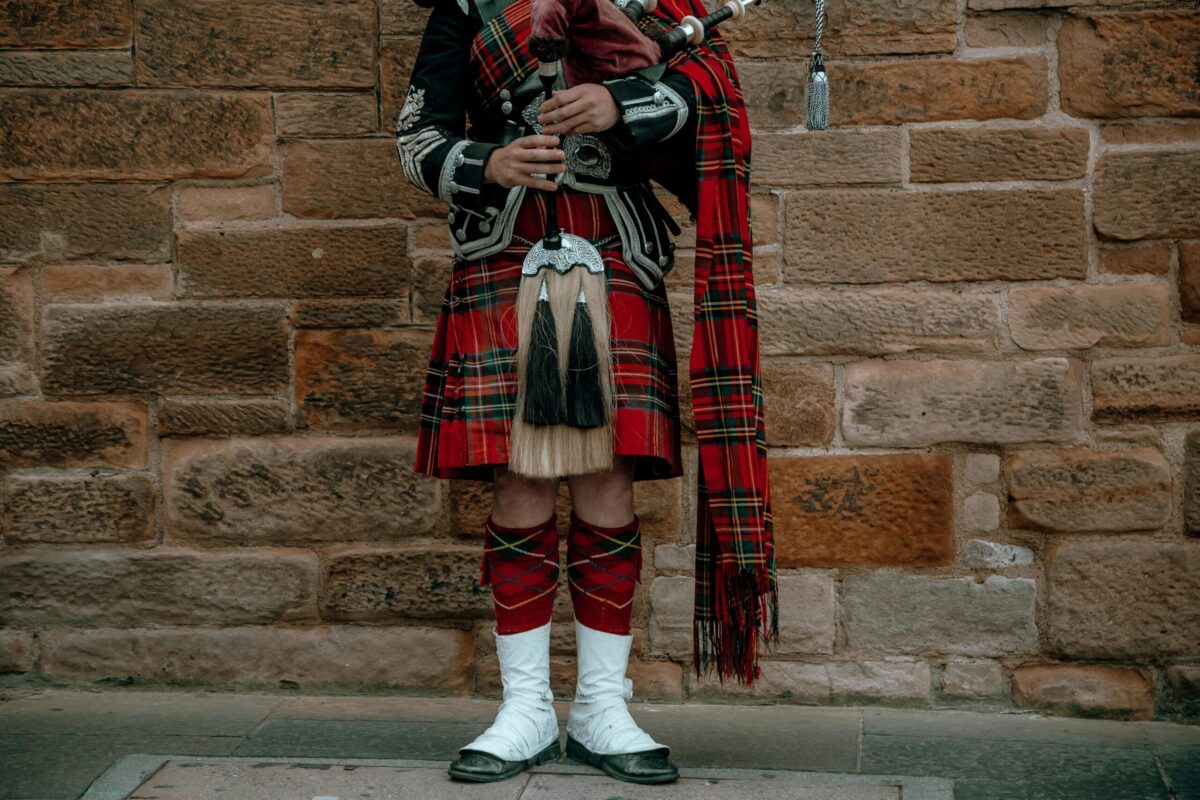
Hogmanay is Scotland’s celebration of New Year’s Eve. Its traditions range from cleaning the home and visiting neighbours to singing “Auld Lang Syne” and carrying symbolic gifts across a threshold after midnight.
The best-known custom is first-footing. The first person to enter a home in the new year is traditionally believed to influence the household’s luck. A first-footer may bring shortbread, coal, whisky or another small gift representing comfort, hospitality and prosperity.
Not every Scottish household observes the same customs, and many people celebrate with an ordinary dinner, party or quiet evening at home. Traditions also differ between regions and generations.
This guide explains the meaning of Hogmanay, the most recognisable Scottish New Year traditions and what to bring if you are invited to celebrate.
Disclosure: This article may contain affiliate links. If you buy something through one of these links, we may earn a small commission at no additional cost to you.
Hogmanay Traditions: Quick Answer
Hogmanay is the Scottish name for New Year’s Eve, celebrated on 31 December. Festivities frequently continue into New Year’s Day and sometimes 2 January.
Common Hogmanay traditions include:
- Cleaning the home before midnight
- Gathering with friends and family
- Watching the clock and hearing the midnight bells
- Singing “Auld Lang Syne”
- First-footing after midnight
- Bringing symbolic gifts such as shortbread, coal or whisky
- Sharing food and drink
- Attending ceilidhs, concerts or street celebrations
- Taking part in regional fire ceremonies
- Going for a New Year’s Day swim
If you are invited to a Hogmanay gathering, a modest, shareable host gift is appropriate. Shortbread, chocolates, a Scottish food item or a drink the host will enjoy are good options. Do not assume that every host drinks whisky or follows first-footing customs.
What Is Hogmanay?
Hogmanay is the Scots word for the final day of the year and is closely associated with Scotland’s New Year celebrations.
The precise origin of the word is uncertain. Suggested linguistic influences include French, Gaelic, Flemish and Old English. It is therefore better to acknowledge that uncertainty than to present one explanation as established fact. Scotland.org explains the possible origins of the word Hogmanay.
Although Hogmanay technically refers to 31 December, celebrations often continue after midnight and into New Year’s Day. In Scotland, 2 January is also a public holiday, although holiday arrangements vary between workplaces.
Hogmanay can involve:
- A gathering at home
- Dinner with family or friends
- A ceilidh
- A local pub celebration
- Fireworks or a public street party
- First-footing between neighbouring homes
- A quiet midnight toast
The large Edinburgh festival is internationally famous, but it represents only one form of Hogmanay. Many Scottish celebrations are smaller and centred on family, friendship and hospitality.
Why Is Hogmanay Important in Scotland?
New Year developed particular prominence in Scotland partly because Christmas was discouraged by the post-Reformation church and government.
The Parliament of Scotland abolished the Christmas holiday in 1640, and Christmas remained an ordinary working day for many Scots long afterwards. Historic Environment Scotland notes that Christmas Day did not become a Scottish public holiday until 1958. Read Historic Environment Scotland’s timeline of Christmas in Scotland.
This history helped New Year remain the principal winter celebration in many communities. However, modern Scots celebrate Christmas as well as Hogmanay, and the importance of each occasion differs between households.
Claims that every Hogmanay custom comes directly from ancient Norse, Celtic or pagan ritual should be treated cautiously. Some customs have long histories, while others are regional, modern or have changed considerably over time.
8 Hogmanay Traditions and Their Meanings
1. Redding the House Before Midnight
Traditionally, some households prepared for the new year by cleaning the home. This practice is often called redding the house, using a Scots word connected with tidying or putting things in order.
The household might:
- Sweep and clean the rooms
- Remove ashes from the fireplace
- Finish outstanding work
- Settle debts where possible
- Put household affairs in order
The underlying idea is to avoid carrying unfinished business or disorder into the new year.
This does not mean every Scottish family completes a ceremonial deep clean on 31 December. Today, people may follow the custom loosely by tidying the house before guests arrive or completing an important task before midnight.
Cleaning products are not automatically a suitable Hogmanay present. Unless the host specifically wants them, they can feel more like an assigned chore than a celebration.
2. Watching for the Bells
“The bells” refers to midnight and the moment when the old year becomes the new one.
At a gathering, conversation may pause as midnight approaches. Guests watch a clock, countdown together and then exchange good wishes once the bells sound.
The exact celebration varies. It might include:
- A toast
- Hugs and kisses
- Fireworks
- Music
- Opening the door to the first-footer
- Calling relatives and friends
- Singing “Auld Lang Syne”
If you are visiting, follow the host’s lead. Some gatherings are lively and theatrical, while others mark the moment quietly.
3. Singing “Auld Lang Syne”
“Auld Lang Syne” is one of Scotland’s most influential cultural contributions to New Year celebrations around the world.
The song is associated with the Scottish poet Robert Burns, who recorded and developed verses based on existing material. Its title is commonly understood as referring to times long past or “for old times’ sake.”
The lyrics invite people to remember old friendships and share a “cup of kindness.” That makes the song especially fitting at the boundary between two years.
At Scottish celebrations, people may form a circle and hold hands while singing. A familiar custom is to cross arms towards the end of the song, although groups do not always follow the same choreography.
You do not need to know every Scots word to participate. Join respectfully, and avoid imitating a Scottish accent for comic effect.
4. First-Footing After Midnight
First-footing is the Hogmanay custom most closely connected with gift-giving.
The first-footer is the first person to enter a household after midnight. According to the tradition, that visitor can influence the home’s fortune for the coming year.
Traditionally, a tall, dark-haired man was often considered an especially fortunate first-footer. This preference belongs to Scottish folklore and should not be treated as a modern social requirement. Some families still enjoy the tradition, while others disregard the visitor’s appearance entirely.
The practical focus today is usually on welcoming the new year with generosity, companionship and good wishes.
A first-footer should generally:
- Enter after midnight
- Bring a small gift or token
- Offer good wishes to the household
- Accept the host’s hospitality
- Avoid arriving unexpectedly unless that is normal within the relationship
Do not arrange for yourself to be the first-footer without consulting the host. Some families select someone in advance, while others simply welcome whoever arrives first.
VisitScotland describes first-footing with gifts such as whisky, shortbread and coal as an important Hogmanay tradition. Explore VisitScotland’s introduction to Hogmanay.
5. Bringing Symbolic First-Footing Gifts
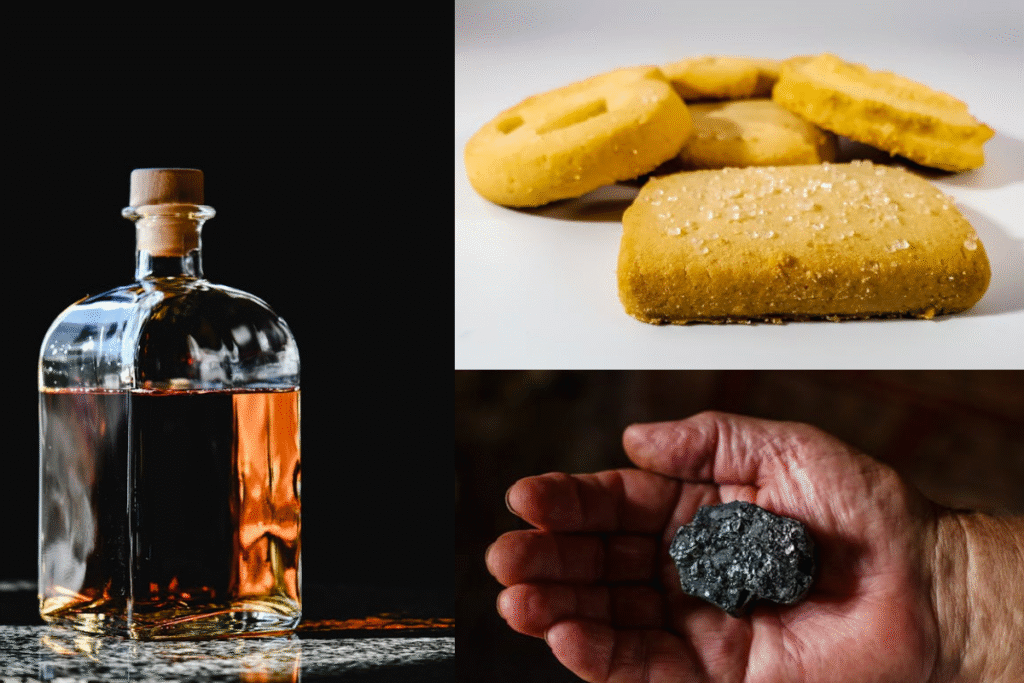
Traditional first-footing gifts represented things a household might hope to enjoy throughout the coming year.
| First-footing gift | Commonly associated wish |
|---|---|
| Coal | Warmth in the home |
| Shortbread or another food | Nourishment and hospitality |
| Black bun | Food, festivity and abundance |
| Whisky | Good cheer and hospitality |
| Salt | Flavour, preservation or prosperity |
| Coin | Financial good fortune |
The exact lists and interpretations vary. A first-footer does not need to arrive carrying every object.
Historically, coal was practical as well as symbolic because it helped heat the home. Today, an actual lump of coal may be inconvenient, dirty or difficult to obtain. A symbolic token or card can convey the idea without leaving the host with something they cannot use.
Shortbread is usually the easiest traditional option. It is shareable, recognisably Scottish and does not require the host to find a place for a permanent object.
These gifts resemble other customs in which food, salt or fuel expresses wishes for a well-provided home. Our guide to symbolic housewarming gifts and their meanings explores some of those traditions.
6. Sharing Food and Drink
Food served at Hogmanay varies between households and regions. There is no single menu that every Scottish family follows.
Possible dishes and treats include:
- Shortbread
- Black bun, a dense fruitcake enclosed in pastry
- Steak pie
- Soup or broth
- Oatcakes and cheese
- Mince pies
- Scottish tablet
- Other family or regional dishes
Steak pie is particularly associated with New Year’s Day in many Scottish households, although it is not universal.
Whisky is strongly connected with Scottish hospitality and Hogmanay imagery, but it should never be treated as compulsory. Some people do not drink for religious, medical or personal reasons.
Hosts may instead serve:
- Non-alcoholic sparkling drinks
- Tea or coffee
- Alcohol-free whisky alternatives
- Soft drinks
- Hot chocolate
- Fruit punch
If you are bringing alcohol, confirm that the household drinks it. Our article about gifts that can accidentally offend explains why alcohol should not be treated as a universally safe gift.
7. Ceilidhs, Music and Community Gatherings
A ceilidh is a social gathering involving traditional music and dancing. Some Hogmanay celebrations include organised ceilidhs, live bands or informal dancing at home.
Newcomers are usually not expected to know all the steps. Watch the demonstration, join when invited and be prepared for energetic group dances.
Public celebrations may also include:
- Concerts
- Street parties
- Fireworks
- Torchlight events
- Community meals
- Local performances
Check event arrangements before attending. Ticketing, weather and safety conditions can change, and a public Edinburgh celebration should not be treated as representative of every Scottish community.
8. Fire Ceremonies and New Year’s Day Swims
Fire appears in several distinctive local New Year customs, but these should be described as regional traditions rather than something practised throughout Scotland.
The best-known example is the Stonehaven Fireballs Ceremony in Aberdeenshire. Participants swing flaming wire cages through the streets before the fireballs are cast into the harbour.
Public torchlight processions and bonfires also appear in some contemporary celebrations. Visitors should attend only organised events and should never recreate a fire custom without appropriate permission and safety controls.
Another highly visible custom is the Loony Dook, a New Year’s Day swim associated with South Queensferry. It began in the 1980s rather than in the ancient past and developed into a popular costumed event.
Cold-water swimming can be dangerous. Anyone considering a New Year swim should use an organised event, understand the conditions and follow local safety advice.
What Should You Bring to a Hogmanay Party?
You do not normally need an elaborate present. Bring something modest that can be shared or enjoyed by the host.
Suitable options include:
Shortbread
A good tin or box of Scottish shortbread is the simplest traditional choice. Check the ingredients if the household has allergies or dietary restrictions.
Black Bun or Another Scottish Bake
Black bun has a strong association with Scottish New Year celebrations. It may be difficult to find outside Scotland, so a fruitcake or another quality bakery item can be a practical substitute.
Whisky
A bottle of Scotch can suit a host who enjoys whisky. You do not need to buy an expensive bottle, and whisky is inappropriate when you are unsure whether the household drinks alcohol.
A Non-Alcoholic Drink
A premium sparkling drink, tea, coffee or alcohol-free spirit provides a celebratory alternative without assuming that the recipient drinks.
A Local Specialty
If you are visiting from another region or country, bring a packaged food specialty from home. This creates a friendly exchange without pretending to be a traditional Scottish object.
Chocolates or Sweets
A modest box of chocolates, Scottish tablet or other sweets can be shared with guests and requires little preparation.
Something Requested by the Host
If the gathering is a shared meal, the host may prefer that you bring bread, dessert, snacks or a particular drink. A requested contribution is more useful than an unsolicited symbolic gift.
For additional options when you are uncertain about a household’s preferences, see our guide to safe global gift ideas.
Hogmanay Gift Etiquette
Keep the gift modest
Hogmanay centres on hospitality and welcoming the new year. An expensive gift can create unnecessary pressure to reciprocate.
Ask before bringing alcohol
Whisky is traditional in some households, but it is not appropriate for everyone. Do not assume that Scottish identity implies drinking alcohol.
Do not insist on being the first-footer
First-footing may be carefully arranged, casually observed or ignored completely. Ask the host rather than trying to stage the custom yourself.
Choose shareable food
Select sealed or clearly labelled food when you do not know the household well. Make allergens and dietary ingredients easy to identify.
Respect regional and family differences
A custom familiar in one part of Scotland may be uncommon elsewhere. Scottish families also differ in how seriously they interpret symbolic traditions.
Do not turn the celebration into a costume
Tartan clothing, kilts and exaggerated accents are not required. Wear what the host suggests and engage with the occasion naturally.
Allow the host to serve the gift when convenient
The host may already have planned the food and drinks. Do not expect your shortbread, whisky or other contribution to be opened immediately.
What Should You Avoid Bringing?
Unless you understand the household’s preferences, avoid:
- An expensive present that creates an obligation
- Alcohol when you do not know whether the host drinks
- Food without ingredient or allergen information
- A messy lump of coal without warning
- Fireworks, torches or another fire-related item
- A dish that needs immediate oven or refrigerator space
- An uninvited additional guest
- Scottish novelty items based on stereotypes
- A highly personal gift for a casual host
- Something intended as a joke but likely to embarrass the recipient
These are practical precautions rather than universal prohibitions. A close friend may genuinely enjoy a playful or unusual gift, while a new acquaintance may prefer shortbread and a card.
What to Write in a Hogmanay Card
A simple message is enough:
Happy Hogmanay! Wishing you and your family health, happiness and good fortune in the coming year.
For a host:
Thank you for welcoming me into your home. Wishing you a happy Hogmanay and a wonderful year ahead.
For a first-footing gift:
A small gift for warmth, good cheer and plenty in the year ahead. Happy Hogmanay!
You can also write “Bliadhna Mhath Ùr,” meaning “Happy New Year” in Scottish Gaelic. Gaelic is one of Scotland’s languages, but not every Scottish person speaks it or uses it at Hogmanay.
Frequently Asked Questions
Final Thoughts
Hogmanay traditions combine hospitality, friendship and hopes for a fortunate new year.
First-footing is the celebration’s most recognisable gift custom. A visitor enters after midnight with a small token such as shortbread, coal or whisky and offers good wishes to the household.
However, Hogmanay is not observed identically throughout Scotland. Some families maintain several traditions, while others simply share dinner, watch the bells or meet friends.
If you are invited to celebrate, follow the host’s lead. Bring a modest, shareable gift, check before choosing alcohol and avoid treating folklore as a rigid set of rules.
A box of shortbread and a card wishing the household health and happiness will usually be more appropriate than an elaborate attempt to reproduce every traditional custom.
Sources and Further Reading
- Scotland.org — Hogmanay and Scottish New Year traditions
- VisitScotland — Hogmanay and New Year in Scotland
- National Trust for Scotland — Hogmanay in the Highlands
- Historic Environment Scotland — A timeline of Christmas in Scotland
- Edinburgh Festival City — Edinburgh’s Hogmanay
- Academy of American Poets — “Auld Lang Syne” by Robert Burns
About the Author
Clara Rosen is the editorial pen name of the founder of The Gifting Edge. Originally from Austria and now based in Australia, she researches international gifting traditions, etiquette and symbolism using official, academic and locally informed sources.