
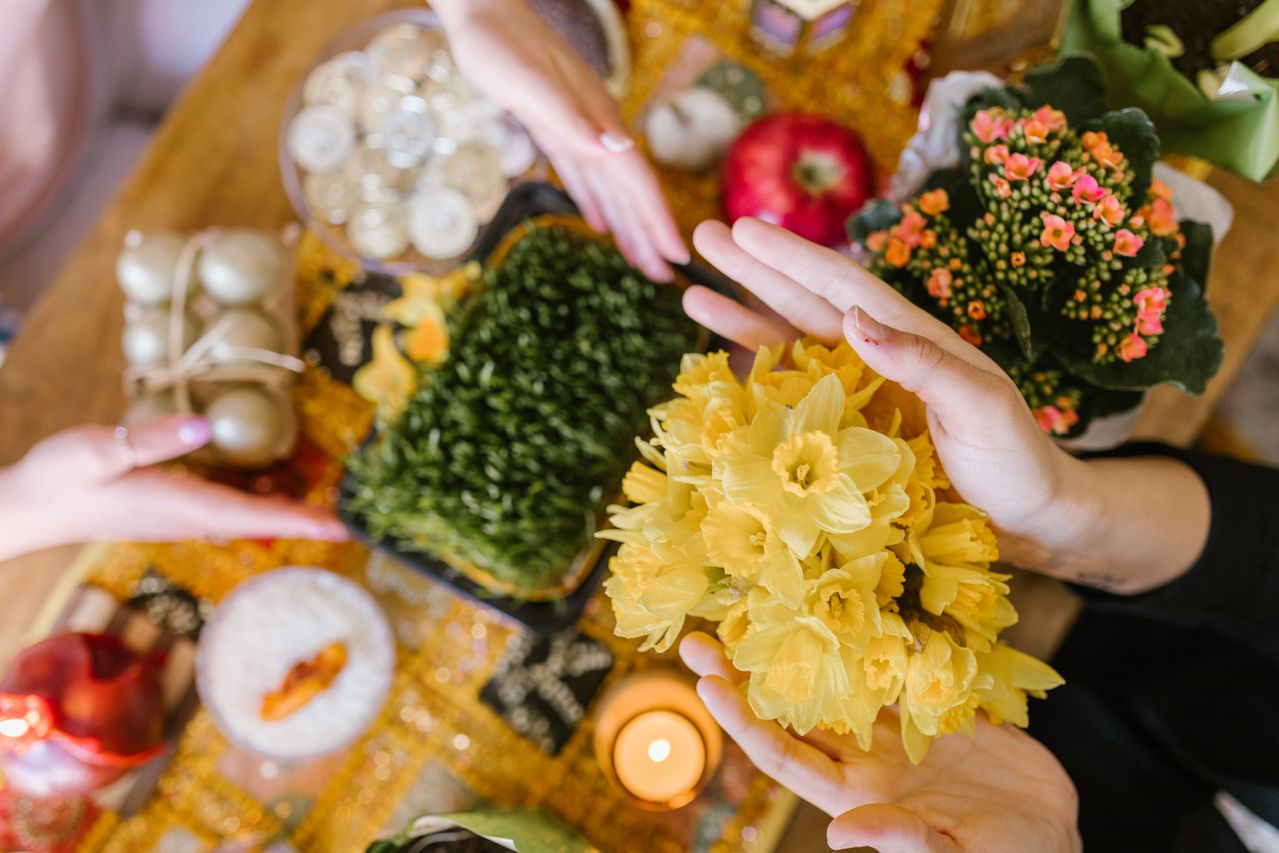
If you are looking for Nowruz gift ideas, choose something joyful, shareable and appropriate for spring – such as Persian sweets, flowers, dried fruit and nuts, premium tea or a thoughtful item for the host’s home.
Money and small presents are also commonly given to children, particularly by parents, grandparents and other older relatives.
The best Persian New Year gift depends on your relationship with the recipient. A box of pastries or flowers works well when visiting someone’s home, while money, books and personal presents are more suitable for close family members.
This guide covers 12 thoughtful gifts for Nowruz, what to bring to a celebration and the etiquette to consider before choosing your present.
Disclosure: This article may contain affiliate links. If you buy something through one of these links, we may earn a small commission at no additional cost to you.
Best Nowruz Gift Ideas: Quick Answer
Appropriate gifts for Persian New Year include:
- Persian sweets or pastries
- Hyacinths, tulips or other spring flowers
- Dried fruit and nuts
- A fresh fruit basket
- Premium tea, saffron or rosewater
- A book of Persian poetry
- Crisp money for children
- A small book, toy or craft for a child
- A locally made handicraft
- Useful serving dishes or tea accessories
- A specialty from your own region
- A curated Nowruz host basket
Choose something modest and celebratory rather than unusually expensive. If you are visiting a household you do not know well, flowers or shareable food are generally the easiest options.
What Gifts Are Traditionally Given for Nowruz?
Nowruz gift traditions vary between countries, regions and families. There is no single present that every person celebrating Nowruz is expected to give.
Visiting relatives and friends is an important part of the celebration. Guests may bring flowers, fruit, nuts or pastries, while older family members commonly give children money or small presents.
The Smithsonian’s account of Iranian Nowruz traditions describes younger people bringing flowers, fruits, nuts and pastries when visiting adults. Parents and grandparents may give younger family members crisp banknotes in return. Read the Smithsonian’s overview of Nowruz traditions.
UNESCO similarly explains that visits are made to family and friends and gifts are exchanged, especially for children. It also notes that Nowruz is celebrated across the Balkans, the Black Sea Basin, the Caucasus, Central Asia, the Middle East and other regions. Read UNESCO’s International Day of Nowruz overview.
This guide focuses primarily on Persian and Iranian gift-giving contexts because many English-language searches use “Nowruz” and “Persian New Year” interchangeably. Customs in Afghanistan, Azerbaijan, Central Asia, Kurdish communities and other Nowruz-celebrating cultures may differ.
12 Thoughtful Nowruz Gift Ideas
1. Persian Sweets and Pastries
Sweets are one of the most practical gifts to bring when visiting someone during Nowruz.
Depending on what is available locally, you might choose:
- Nan-e nokhodchi, delicate chickpea-flour cookies
- Sohan, a saffron brittle associated with Qom
- Persian baklava
- Walnut or almond cookies
- Coconut macaroons
- Rosewater-flavoured confectionery
- A mixed box from a Persian bakery
Choose an assortment that the household can place on the table and share with visitors. A sealed bakery box is particularly useful when you do not know whether the host has already prepared homemade sweets.
Check the ingredients if anyone in the household has allergies or dietary restrictions. Nuts, dairy, gluten and rosewater are common in Persian confectionery.
A non-Persian specialty from your own region can also work. Explain where it comes from and why you chose it.
2. Hyacinths, Tulips or Other Spring Flowers
Flowers complement the springtime themes of Nowruz and make an elegant host gift.
Hyacinths—known as sonbol in Persian—are closely associated with seasonal Nowruz displays. Tulips and other colourful spring flowers can also suit the occasion.
Choose:
- A small pot of flowering hyacinths
- A colourful seasonal bouquet
- Tulips
- Daffodils
- A simple mixed arrangement
- An easy-care flowering plant
A modest arrangement is easier for a busy host to manage than a very large bouquet. If possible, present the flowers in a container or ask a florist to prepare them for a home visit.
Remember that flower preferences and meanings vary between cultures and individuals. Our guide to plant gift etiquette across cultures explains what to consider when giving a living plant.
3. Dried Fruit and Nuts
A beautifully presented selection of dried fruit and nuts is easy to share and fits naturally with Nowruz hospitality.
Possible ingredients include:
- Pistachios
- Almonds
- Walnuts
- Hazelnuts
- Raisins
- Dried apricots
- Dates
- Dried mulberries
- Roasted chickpeas
A mixture of nuts and dried fruits may be referred to as ajil. Preparations and spellings vary, and individual households may have their own preferred combination.
Choose fresh, good-quality products and make any allergens clear. A divided serving box or reusable container can make the gift more presentable, but the food itself matters more than elaborate packaging.
This is a particularly useful option when the household expects several rounds of visitors during the holiday.
4. A Fresh Fruit Basket
Fresh fruit is another generous, shareable gift for a household.
Create a modest basket using attractive seasonal fruit rather than an oversized arrangement. Suitable choices depend on where you live and what is fresh at the time.
You might include:
- Apples
- Oranges or mandarins
- Pears
- Grapes
- Pomegranates
- Berries
Choose fruit that is in good condition and ready to enjoy. Avoid an enormous basket that requires substantial refrigerator or counter space.
If you are travelling internationally, do not pack fresh fruit without checking the destination’s customs and biosecurity requirements. Buying it locally is normally easier.
5. Premium Tea, Saffron or Rosewater
A quality pantry product can be a refined modern Nowruz gift, especially for a host who enjoys cooking or entertaining.
Consider:
- Loose-leaf black tea
- A Persian tea blend
- High-quality saffron
- Culinary rosewater
- Cardamom
- Local honey
- Premium preserves
Saffron is best purchased from a reputable seller because quality varies considerably. Choose sealed packaging with clear information about the product’s origin and weight.
Rosewater can be used in sweets and drinks, but its flavour is distinctive. Give it to someone who enjoys Persian cooking rather than assuming every recipient will use it.
You could combine tea with a small jar of honey or a box of sweets to create a simple host gift.
6. A Book of Persian Poetry
Poetry has a prominent place in Persian cultural life, making a carefully chosen book a meaningful present for the right recipient.
Collections by poets such as Hafez, Rumi, Saadi or Omar Khayyam may be appropriate, depending on the reader’s interests and language.
Consider:
- A Persian-language edition
- A respected English translation
- A bilingual poetry collection
- An illustrated edition
- A compact book suitable for a family
- A book about Persian art, gardens or food
Do not select a book only because it appears “exotic” or decorative. Look for a reputable translation and consider whether the recipient already owns the best-known works.
A poetry book is more personal than a box of sweets, so it works best for a friend, relative or host whose interests you know.

7. Crisp Money for Children
Money given to children and younger family members is a familiar part of many Persian Nowruz celebrations. This gift may be called eidi.
Older relatives commonly give clean or crisp banknotes to younger family members as a gesture of good fortune for the coming year.
If you are not part of the family, you are not automatically expected to give money to every child present. Ask the host or a close family member if you are uncertain.
Place the money in:
- A small envelope
- A colourful card
- A decorative paper sleeve
- A children’s book
The amount should be appropriate to the relationship and the family’s usual practice. The symbolic gesture matters more than giving a large sum.
8. A Small Book, Toy or Creative Gift for a Child
UNESCO notes that gifts are exchanged especially for children during Nowruz. A small age-appropriate present can therefore be a thoughtful addition when visiting a family.
Ideas include:
- An illustrated book
- Art supplies
- A puzzle
- A small board game
- A craft activity
- A spring-themed toy
- Stickers or stationery
Ask a parent when you do not know the child’s age, interests or needs. Avoid noisy, messy or expensive toys that create work or an obligation for the household.
This should remain a modest gesture. You do not need to arrive with a large present for every child attending a gathering.
9. A Locally Made Handicraft
UNESCO’s description of Nowruz mentions gifts made by artisans among the objects exchanged during the celebration.
A locally made item can be meaningful when it has a genuine connection to the giver’s region or the recipient’s interests.
Suitable possibilities include:
- A small ceramic dish
- Handmade coasters
- A woven item
- A decorative box
- A piece of calligraphy
- A small textile
- A locally made serving board
Keep the object compact and useful. Large decorative pieces can create storage and display obligations, particularly when you do not know the recipient’s taste.
Avoid buying a mass-produced object and presenting it as authentically Persian. If cultural authenticity is part of the gift’s appeal, purchase from an identifiable artist or specialist.
10. A Serving Dish or Tea Accessory
Nowruz often involves welcoming visitors and sharing food, so a useful item for entertaining can suit a host who enjoys household gifts.
Consider:
- A small serving plate
- A nut or confectionery dish
- A tea tray
- Tea glasses
- A sugar bowl
- Cloth napkins
- A simple table runner
Choose a restrained design unless you know the recipient’s style well. A compact serving object is easier to incorporate than a complete dinner set.
This option is most suitable for someone whose home and preferences you know. When visiting a new acquaintance, consumable gifts are generally safer.
11. A Specialty From Your Home Region
A specialty from your city, region or country can create a warm cultural exchange.
Possible gifts include:
- Artisan chocolates
- Regional tea or coffee
- Honey
- Preserves
- Biscuits
- Packaged confectionery
- A small local craft
Choose something easy to share and explain briefly why it represents your home. This is often more personal than buying a generic Persian-themed souvenir.
If you are travelling across a border, check customs requirements before packing food. Select commercially sealed, shelf-stable products with clear ingredient labels.
For more flexible ideas, see our guide to safe global gifts for different cultures.
12. A Curated Nowruz Host Basket
If you want to give something more substantial, combine several modest items in one small basket.
For example:
- Persian tea
- Dried fruit and nuts
- A box of pastries
- Fresh flowers
- A handwritten card
Another combination might include saffron, rosewater and a small serving dish for someone who enjoys cooking.
Keep the basket focused rather than filling it with unrelated products. Three carefully chosen items generally feel more thoughtful than a large collection of inexpensive objects.
A host basket may suit a family gathering or a close friend, but it is not necessary for a casual visit. Flowers, fruit or sweets alone are sufficient.
What Should You Bring to a Nowruz Celebration?
When invited to someone’s home for Nowruz, bring one modest gift for the household. Persian sweets, flowers, fruit, nuts or tea are all suitable starting points.
You do not need to bring an item for the Haft-Seen table unless the host specifically asks. The table has cultural and sometimes personal significance, and the household may already have arranged it carefully.
If children live in the home, you may add a small present for them. Money is usually more appropriate when you are a relative or already understand the family’s custom.
Ask about food allergies, religious considerations and alcohol rather than making assumptions. Nowruz is celebrated by people from different countries, cultures and faiths, and no single rule applies to every household.
Nowruz Gifts for Different Recipients
For a host
Choose something shareable and easy to serve:
- Persian pastries
- Flowers
- Fruit
- Dried fruit and nuts
- Tea
- A regional specialty
For parents or grandparents
Select something thoughtful but manageable:
- A poetry book
- Premium tea or saffron
- Flowers
- A family photograph
- A locally made craft
- A meal or shared experience
For children
Depending on your relationship, consider:
- Crisp money in an envelope
- A book
- Art supplies
- A small game
- A creative activity
For friends or colleagues
Keep the gift friendly and modest:
- Chocolates
- A small box of sweets
- Flowers
- Tea or coffee
- A card with Nowruz wishes
For a partner
A more personal gift may be suitable:
- Jewellery
- A book with a handwritten inscription
- A planned experience
- Flowers
- An accessory chosen for their taste
Personal gifts should reflect the individual rather than relying on a cultural stereotype.
Nowruz Gift Etiquette
Keep the gift celebratory but modest
The present should express goodwill without creating pressure to reciprocate. An expensive gift can feel disproportionate, especially in a new or professional relationship.
Consider the household’s traditions
Nowruz is observed across many cultures and communities. Ask discreetly when you are unsure about religious practice, diet or family customs.
Present food so it can be shared
Choose sealed packaging, make allergens clear and avoid bringing a dish that requires immediate preparation unless the host has agreed.
Add a cheerful card
A short message makes even a simple gift feel intentional.
You can write:
Nowruz Mobarak!
Meaning:
“Happy Nowruz!”
A longer English message could be:
Wishing you and your family a joyful Nowruz filled with health, happiness and new beginnings.
Respect the host’s Haft-Seen table
Admire the display, but do not rearrange it or place your gift on it without permission. Traditions and the chosen items may differ between households.
Do not expect the gift to be opened immediately
The host may be greeting several visitors or preparing food. Allow them to decide when to open or serve what you brought.
What Gifts Should You Avoid for Nowruz?
Unless you know the recipient’s preferences, avoid:
- An unusually expensive gift
- Alcohol when you do not know whether the household drinks it
- Food without ingredient or allergen information
- Highly personal clothing or fragrance
- Large decorative objects
- Religious items chosen on assumptions about the recipient
- Stereotypical “Persian” objects of unclear authenticity
- A live animal or another gift requiring long-term care
- Fresh food that cannot be stored safely
- Items for the Haft-Seen table that the host did not request
Alcohol requires particular care. Nowruz is celebrated by people with different religious beliefs and personal practices. Some households may serve alcohol, while others avoid it entirely. Bring tea, sweets or a non-alcoholic drink when you are uncertain.
These precautions are not universal prohibitions. The recipient’s preferences and your relationship with them remain more important than trying to follow a rigid cultural checklist.
What Is Nowruz?
Nowruz means “new day” and marks the beginning of spring and the new year for hundreds of millions of people.
The celebration occurs at the spring equinox and has been observed for more than 3,000 years across a broad geographic area. UNESCO recognises Nowruz as part of the Intangible Cultural Heritage of Humanity and describes it as promoting peace, solidarity between generations, reconciliation and neighbourliness.
Although commonly called Persian New Year in English, Nowruz is also celebrated in Afghanistan, Azerbaijan, Iraq, Kazakhstan, Kyrgyzstan, Pakistan, Tajikistan, Türkiye, Turkmenistan, Uzbekistan and other communities and regions.
Customs differ, but celebrations may include:
- Cleaning the home
- Wearing new clothes
- Preparing symbolic displays
- Sharing festive meals
- Visiting relatives, elders and neighbours
- Giving gifts to children
- Public celebrations involving music, dance, water or fire
In many Iranian households, the centrepiece is the Haft-Seen table. It traditionally includes seven items whose Persian names begin with the letter seen. The Smithsonian National Museum of Asian Art describes the table as representing new life and renewal. Explore the Smithsonian’s introduction to the Haft-Seen table.
The Haft-Seen is an important part of understanding the celebration, but it does not mean a visitor must bring one of its symbolic items as a gift.
Frequently Asked Questions
Final Thoughts
The best Nowruz gift is joyful, considerate and suited to your relationship with the recipient.
When visiting a household, choose something easy to share, such as Persian sweets, flowers, fruit, nuts or tea. For children and close younger relatives, crisp money or a small personal present may be appropriate.
You do not need to find an elaborate or stereotypically Persian object. A modest gift selected with genuine knowledge of the recipient will usually communicate more care.
When uncertain, bring a small box of sweets or a colourful spring bouquet, add a card saying Nowruz Mobarak and let your sincere good wishes carry the gesture.
For another culturally significant New Year celebration, see our guide to Rosh Hashanah gift ideas and host-gift etiquette.
Sources and Further Reading
- UNESCO — International Day of Nowruz
- United Nations — International Nowruz Day
- Smithsonian Folklife — Spring with a Haft Seen
- Smithsonian National Museum of Asian Art — Nowruz traditions
- Smithsonian National Museum of Asian Art — Nowruz and the Haft-Seen table
About the Author
Clara Rosen is the editorial pen name of the founder of The Gifting Edge. Originally from Austria and now based in Australia, she researches international gifting traditions, etiquette and symbolism using official, academic and locally informed sources.