
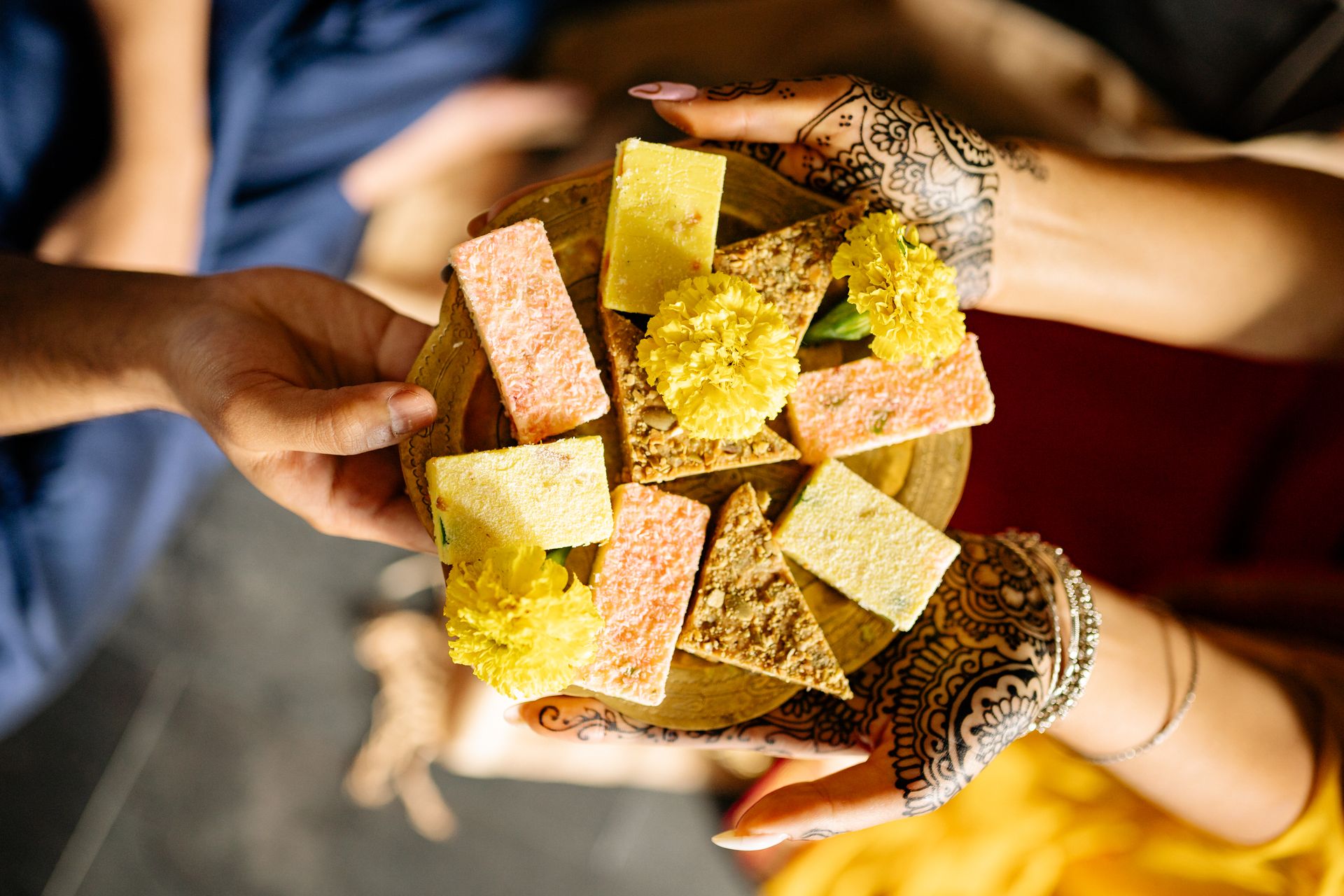
You have been invited to a Diwali celebration and want to bring something thoughtful—but you are not sure what is expected. A small host gift can be a warm gesture, but there is no single gift every family expects, and you do not need to know every tradition to be a considerate guest.
For many celebrations, a beautifully packaged box of sweets or dry fruits is an easy choice. Flowers, a small home gift or a card can also work well. If you are unsure about food, religious items or what the host would find useful, ask. A simple question is more thoughtful than guessing.
Quick answer: What should I bring to a Diwali celebration?
Consider a small box of Indian sweets, a dry-fruit selection, flowers, a useful home gift or a card. Check dietary needs before bringing food, and choose a diya or other religiously meaningful object only when you know the recipient would welcome it. A gift is a kind gesture, not a universal requirement.
When is Diwali in 2026? The Australian Government’s 2026 cultural and religious dates calendar lists Deepavali on Sunday, 8 November 2026. The festival follows a Hindu lunisolar calendar, so its Gregorian date changes each year. Some communities observe events across several days; check with your host or local temple for their dates and timings.
What Is Diwali?
Diwali, also called Deepavali and sometimes spelled Divali, is often known as the Festival of Lights. The name Deepavali is commonly translated as “row of lights.” Many celebrations include lighting lamps, decorating homes, sharing food and spending time with family and friends. The India Ministry of Tourism’s overview describes the festival’s lights, family traditions and regional variation.
Diwali does not have one story or one set of customs for everyone. Many Hindus connect the festival with Lakshmi, the goddess of prosperity, or with stories such as Rama’s return to Ayodhya. Jains observe Diwali in connection with Mahavira’s spiritual liberation, while Sikhs mark Bandi Chhor Divas, commemorating Guru Hargobind’s release from imprisonment. The Brandeis University guide explains some of these distinct traditions.
People of different faiths and backgrounds celebrate in different ways, and not every Indian person celebrates Diwali. If you are a guest, let your host describe what the occasion means to their family.
Do You Need to Bring a Gift?
There is no universal rule that guests must bring a gift. If you are invited to someone’s home, a modest host gift is often a welcome gesture. For a larger community gathering or an office event, gifts may not be expected. Follow the invitation and the host’s lead.
A good host gift is easy to receive. Avoid bringing something that needs to be refrigerated, plated or arranged while your host is preparing for guests. If the host has said “please don’t bring anything,” you can simply thank them and arrive ready to enjoy the celebration.
If you are still unsure, ask: “I’d love to bring a little something. Is there anything your family would particularly enjoy?”
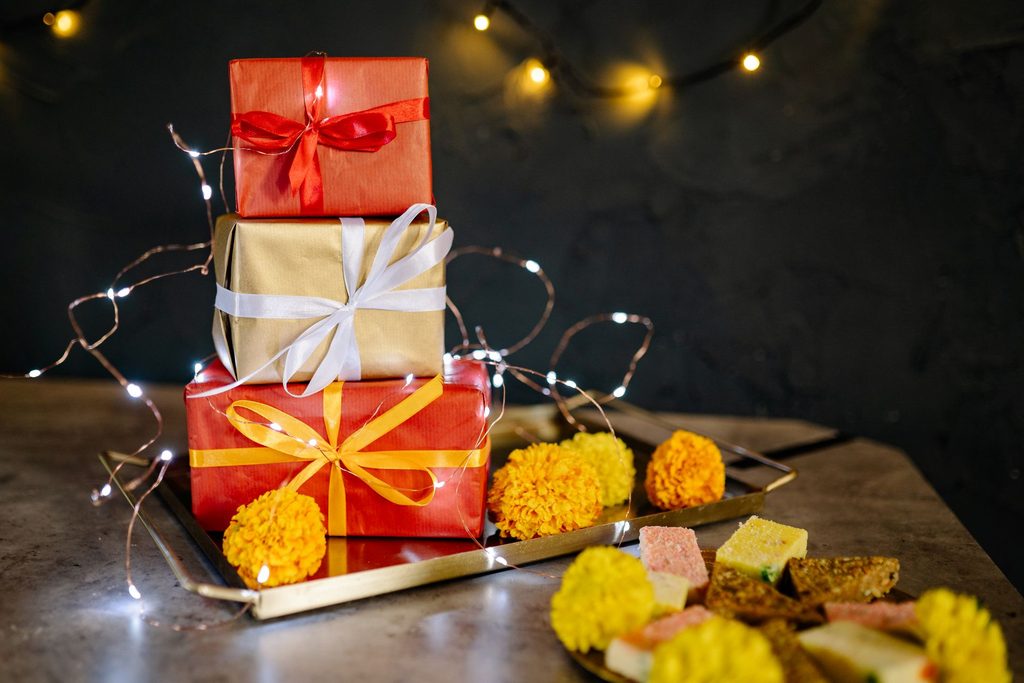
Thoughtful Diwali Host Gift Ideas
The examples linked below are regular retailer links. The Gifting Edge does not earn commission from purchases through them at this time. Stock, prices and delivery dates can change, so check the retailer’s details before ordering.
1. A box of Indian sweets
Mithai—Indian sweets made in many regional styles—is a familiar festive gift and easy to share with guests. A neatly presented box from a trusted Indian sweet shop feels special without being extravagant.
Recipes and ingredients vary. Sweets may contain dairy, nuts or gelatine, so check for allergies and dietary preferences before buying. When you do not know the household’s requirements, choose a clearly labelled box or ask the host which shop they prefer.
Retailer example: Browse Pure Desi’s Diwali sweet boxes. Check the ingredients and delivery date before ordering.
2. A dry-fruit or nut gift box
A small box of dried fruit or nuts is festive, shelf-stable and easy for a host to serve later. It is a useful alternative if the household already has plenty of sweets.
Check for allergies and choose a modest, well-presented selection rather than a large hamper that may take up space. If you are buying online, look for clear ingredient information and a delivery date that leaves the host time to receive it.
3. Flowers
A cheerful bunch of flowers can brighten the home and make a gracious host gift. Choose a manageable arrangement that is easy to display, rather than a large bouquet the host has to trim and arrange during the party.
Flowers are not right for every household: allergies, pets, fragrance and personal preference can all matter. If you are unsure, ask first or choose a non-floral gift. For more on choosing a plant as a present, see our guide to plant gift etiquette.
4. A useful serving or home item
A small serving bowl, tea towel, tray or set of napkins can be thoughtful without being explicitly religious. Choose something that suits the recipient’s home and will be useful after the celebration.
Keep the gift modest and easy to store. A Diwali invitation does not call for an expensive present, and a practical item is more likely to be appreciated when it fits the host’s tastes.
5. A diya or candle holder
A diya is a small lamp used in many Diwali celebrations. A simple diya can be a meaningful gift if you know the recipient enjoys decorating for the festival. If you do not know them well, a neutral candle holder or another home item may be a safer choice.
Avoid treating religious or ritual objects as novelty décor. Choose something practical and safe to use, and give it only when you have reason to think it would be welcome.
Retailer example: If the recipient would appreciate one, browse diyas and candle holders from Indian Impressions. Check the item’s use and care details before choosing it.
6. Tea, coffee or a small local specialty
A good tea or coffee selection, local honey or another regional specialty can make a personal gift, especially if it comes from your part of Australia or a place you have visited together. It does not need to imitate a tradition; the story behind the choice can make it meaningful.
Check ingredients if it is a food product, and avoid choosing alcohol unless you already know the recipient drinks and would welcome it.
Retailer example: For a tea-loving host, browse T Totaler’s tea gift sets, including Australian-grown blends.
7. A handwritten card
A sincere card can accompany a small gift or stand on its own. A simple message is enough:
Wishing you and your family a joyful Diwali filled with light, happiness and time together.
“Happy Diwali” is a warm, widely understood greeting. You can also ask how your host likes to mark the occasion and use their preferred name for the festival.
Diwali Gifts for a Coworker
A gift for a coworker should be small, comfortable to receive at work and appropriate to your relationship. You do not need to give a gift just because a colleague celebrates Diwali; a warm greeting or joining an office celebration may be enough.
If you would like to give something, consider:
- A small, sealed box of sweets or chocolates, after checking ingredients and dietary needs
- A good tea or coffee selection
- A modest shared treat for the team, if workplace norms allow it
- A handwritten card with a simple Diwali greeting
Retailer example: See this 250g Diwali sweet box from Pure Desi. Check the ingredients, preorder window and delivery details before choosing one.
Avoid expensive or intimate gifts, alcohol when you do not know the person’s preferences, and anything that assumes all colleagues celebrate the same way. If it is an office-wide exchange, follow the organiser’s budget and gift guidance.
Diwali Gift Etiquette: A Few Simple Tips
Ask before bringing food or drink
Dietary practices differ between people and households. Sweets may contain dairy, nuts or gelatine, and some recipients may have allergies or other dietary preferences. Alcohol may not suit the host. Ask if you are uncertain, or choose a non-food gift.
Keep the gift modest and easy to receive
A gift should not create extra work or make the host feel they need to reciprocate. Choose something that can be set aside and enjoyed later.
Follow the host’s lead
If the celebration includes prayers, a meal or other customs, let your host guide you. You can show respect without pretending to know everything. A genuine question is better than assuming one family’s practice represents everyone.
Choose symbolic gifts with care
Some people appreciate religious images or ritual items; others may prefer not to receive them. Give these only when you know the recipient would welcome them. A practical home gift, a card or a shared treat is usually easier when you are unsure.
Present food in its packaging
If you bring sweets or other food, leave it in its original packaging so ingredients and allergens are easy to check. A simple gift bag or ribbon is enough.
What Should You Avoid Giving?
There are few rules that apply to every Diwali household. These are reasons to check first, not universal prohibitions:
- Food or alcohol: only bring it if it suits the recipient’s preferences and dietary needs.
- Leather goods: avoid these when you do not know the recipient’s views or preferences.
- Religious objects: do not choose them as novelty gifts or without knowing they will be appreciated.
- Fireworks: the host may not want them, and they can raise safety or local-rule concerns.
- Large or inconvenient presents: avoid anything the host must store, prepare or display immediately.
The aim is not to memorise a list of taboos. Choose with care, stay open to the recipient’s preferences and let them define what feels appropriate in their home.
Final Thoughts
If you are invited to a Diwali celebration, a small host gift can be a kind gesture—but it does not need to be elaborate. Sweets, dry fruits, flowers, tea or a useful home item can all work when they suit the host. For coworkers, keep it simple and follow the office’s usual approach to gifts.
Diwali means different things to different people and communities. If you are unsure what would be welcome, ask your host. That small act of consideration is often the most thoughtful part of the gift.
For more ideas that work across occasions and cultures, see our guide to 15 safe global gift ideas.
Frequently Asked Questions
Sources and Further Reading
- Australian Government: 2026 Calendar of Cultural and Religious Dates
- India Ministry of Tourism: Diwali
- Brandeis University: A Guide to Diwali
- SBS Cultural Atlas: Indian Culture and Etiquette
About the Author
Clara Rosen is the editorial pen name of the founder of The Gifting Edge. Originally from Austria and now based in Australia, she researches international gifting traditions, etiquette and symbolism using official, academic and locally informed sources.