

If you’re choosing gifts for Japanese hosts or a Japanese host family, bring something small, shareable and neatly wrapped – ideally regional sweets, tea, coffee or another specialty from home.
Your gift does not need to be expensive. It is a gesture of appreciation, not a test of how much you know about Japanese customs. Good presentation and a connection to where you come from usually matter more than the price.
This guide covers ten thoughtful gift ideas, what you should avoid and the etiquette to follow when visiting a Japanese home.
Disclosure: This article may contain affiliate links. If you buy something through one of these links, we may earn a small commission at no additional cost to you.
Best Gifts for Japanese Hosts: Quick Answer
The safest gifts for a Japanese host family include:
- Regional sweets or chocolates
- Premium tea or coffee
- A sealed specialty from your home region
- Wine or a non-alcoholic regional drink
- Seasonal fruit purchased in Japan
- A small, locally made handicraft
Choose something modest, attractive and easy for the household to share or use.
If you need more broadly suitable options, see our guide to safe gift ideas across cultures.
Is a Japanese Host Gift Called Temiyage or Omiyage?a
A gift brought when visiting someone’s home is more accurately called temiyage (手土産).
The better-known word omiyage (お土産) generally describes a regional souvenir brought home from a trip for friends, relatives or colleagues. The customs overlap because both often involve beautifully packaged, shareable food.
SBS Cultural Atlas explains the distinction between temiyage and omiyage.
You do not need to use the Japanese term when presenting your gift. A warm thank-you and a brief explanation of what you brought will be enough.
10 Gift Ideas for a Japanese Host Family
1. Regional Sweets or Chocolates From Your Home Country
A specialty from your city, region or country is one of the best gifts for Japanese hosts.
Good options include:
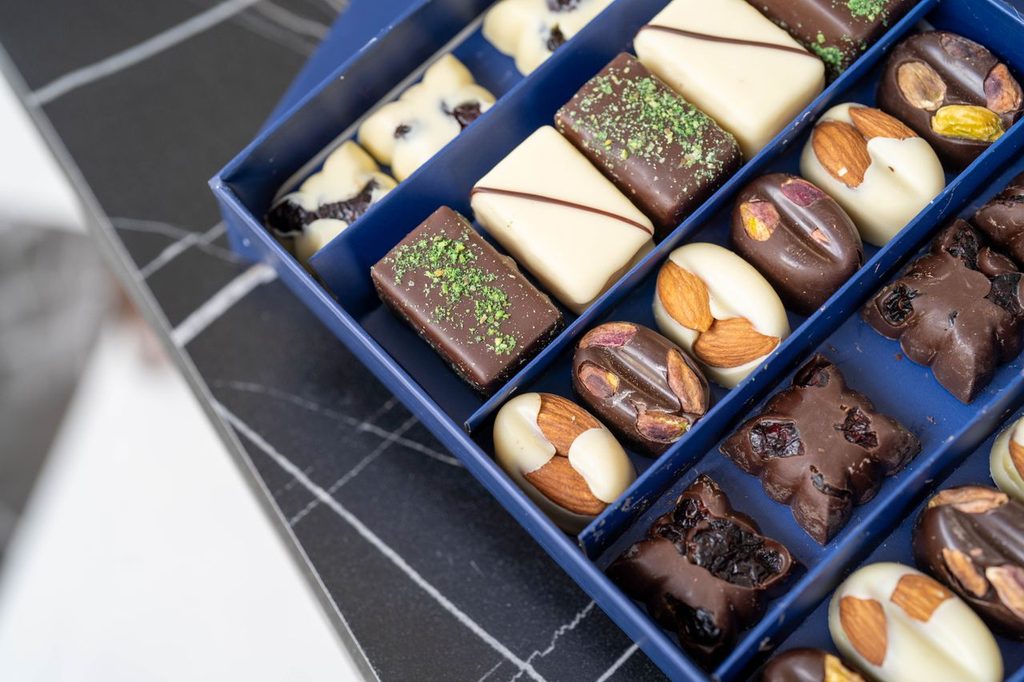
- Artisan chocolates
- Traditional biscuits
- Premium shortbread
- Regional confectionery
- A packaged local dessert
- A distinctive sweet unavailable in Japan
Choose something with a reasonable shelf life and packaging that will survive the journey. Individually wrapped portions are convenient because your host can easily share them with family members.
The gift becomes more meaningful when you can explain where it comes from or why it is popular at home.
2. Premium Tea or Coffee
Quality tea or coffee is refined, useful and easy to share.
Consider bringing:
- Loose-leaf tea in a sealed tin
- Individually wrapped tea bags
- Locally roasted coffee beans
- Ground coffee from a respected local roaster
- A caffeine-free herbal blend
Japan already has highly developed tea and coffee cultures, so the appeal should come from the product’s quality or connection to your home – not from presenting it as something your host has never encountered.
If you do not know whether the family drinks coffee, a small tea assortment may be the more flexible choice.
3. A Sealed Specialty From Your Home Region
A carefully selected food product can introduce your host family to a flavour associated with your home.
Possible gifts include:
- Premium maple syrup
- Fruit preserves
- Artisan crackers
- A distinctive spice blend
- A regional sauce or condiment
- Packaged gourmet nuts
Choose a commercially sealed product with clear ingredient information. Avoid anything that could leak, spoil quickly or require immediate refrigeration.
Before travelling, check Japan’s import requirements. Most fresh fruit and vegetables are restricted, while meat products are generally prohibited without the required certification. These rules apply even when the item is intended as a personal gift.
Check the current guidance from Japan’s Plant Protection Station and Animal Quarantine Service before packing food.
4. Wine or Another Regional Drink
If you know that your hosts drink alcohol, a bottle associated with your home region can make a thoughtful present.
Depending on where you live, this might be:
- Regional wine
- Craft gin
- Boutique whisky
- A local liqueur
- A small craft beer selection
Choose something you can briefly explain: where it comes from, why the region is known for it or how it is normally enjoyed.
Do not assume that every household drinks alcohol. Premium tea, coffee or a special non-alcoholic drink is safer when you are uncertain.
There is also no requirement to select an expensive bottle. A modest regional product with an interesting story can be more personal.
5. Seasonal Fruit Purchased in Japan
Premium fruit is an established gift in Japan and can be an elegant choice if you are buying your gift after arrival.
Japanese department stores and specialist fruit shops frequently offer beautifully presented seasonal fruit, including:
- Melons
- Peaches
- Strawberries
- Grapes
- Pears
- Citrus fruit
You do not need to buy the most luxurious fruit in the shop. Ask a staff member for a modest gift suitable for a home visit and provide your approximate budget.
Purchase fruit after arriving in Japan rather than bringing it through customs. The importation of most fresh fruit is strictly regulated.
6. Boxed Sweets From a Japanese Department Store
If you were unable to bring something from home, visit the food hall of a Japanese department store. These food halls are commonly known as depachika.
You will usually find an extensive selection of:
- Biscuits
- Chocolates
- Cakes
- Wagashi
- Rice crackers
- Seasonal confectionery
Gift boxes are often already attractively presented, and staff can normally wrap them for you.
The Japan National Tourism Organization’s depachika guide highlights department-store sweets as popular gifts and mementos.
This is one of the easiest last-minute choices for a Japanese host family because presentation, portability and sharing have already been considered.
7. A Small Handicraft From Your Region
A modest, locally made object can work well when it has a genuine connection to your home.
Examples include:
- A small ceramic dish
- Handmade coasters
- A woven item
- A small ornament
- A piece by a regional artist
Keep the object compact and useful. Large decorative pieces can create storage or display obligations, particularly when you do not know your host’s personal taste.
A small craft becomes more meaningful when you can tell the family who made it or what it represents.
8. Quality Stationery or a Small Illustrated Book
A beautifully designed notebook, card set or compact book can be suitable for a host who enjoys art, writing or travel.
Consider:
- A notebook by a local designer
- Letterpress cards
- A small photography book about your region
- Botanical illustrations from your area
- A calendar featuring local landscapes
Avoid text-heavy books unless you know your host is comfortable reading the language. A visually led book is easier to enjoy across language barriers.
This option works best when it communicates something about your home rather than imitating a Japanese product.

9. Flowers Purchased From a Japanese Florist
Flowers can make a lovely host gift, but they require more care than packaged food.
If you would like to bring flowers:
- Purchase them after arriving in Japan
- Use a local florist
- Explain that they are for a home visit
- Ask for a modest seasonal arrangement
- Avoid choosing symbolic flowers without guidance
Some flowers and colours have associations with funerals or other specific occasions. A local florist can help you select an appropriate arrangement.
Do not bring fresh flowers, plants or seeds into Japan without checking the relevant quarantine rules.
10. A Small Extra for the Host Family’s Children
If you are staying with a host family and know that children live in the household, a small additional gift for them can be considerate.
Ideas include:
- Individually wrapped sweets
- Stickers featuring animals from your country
- A simple picture book
- A small age-appropriate game
- A lightweight regional souvenir
Check for allergies and avoid toys that are noisy, messy or expensive.
This should be a small addition to the main household gift rather than a replacement for it.
Good American Gifts for Japanese Hosts
Good American gifts for Japanese hosts include regional chocolates, locally roasted coffee, specialty preserves, a small national-park photography book or a product associated with your state.
Instead of choosing something that is merely “American,” look for an item with a specific regional story. A specialty from Vermont, California, Hawaii or your own hometown will usually feel more personal than a generic souvenir.
If you are travelling from Australia, suitable alternatives might include artisan chocolates, macadamia products, locally roasted coffee, Australian tea or a small regional craft. Always confirm that packaged food complies with Japanese import requirements.
How Much Should You Spend?
There is no universal amount. Your relationship with the host, the occasion and the length of your visit all matter.
As a general guide, Japan Guide suggests approximately ¥1,000 to ¥5,000 for gifts given to friends or a host family. The intention is to show appreciation without making the recipient feel obligated to reciprocate with something equally valuable.
For an ordinary dinner invitation, something at the lower or middle part of that range is normally sufficient. A longer homestay may justify a slightly more substantial gift.
Read Japan Guide’s overview of gift giving in Japan.
Japanese Host Gift Etiquette
Presentation is an important part of Japanese gifting because it communicates care and attention.
Wrap the gift carefully
If you purchase the gift in Japan, ask the shop to wrap it. A reusable furoshiki wrapping cloth can also create an elegant presentation.
Furoshiki is a square cloth used to wrap and carry objects. It is different from a tenugui, which is a multipurpose cotton cloth or towel.
Japan House provides examples of traditional furoshiki wrapping methods.
Present it after the initial greeting
Enter the home and complete the initial greetings before presenting your gift. Follow your host’s lead rather than worrying about performing a formal ritual perfectly.
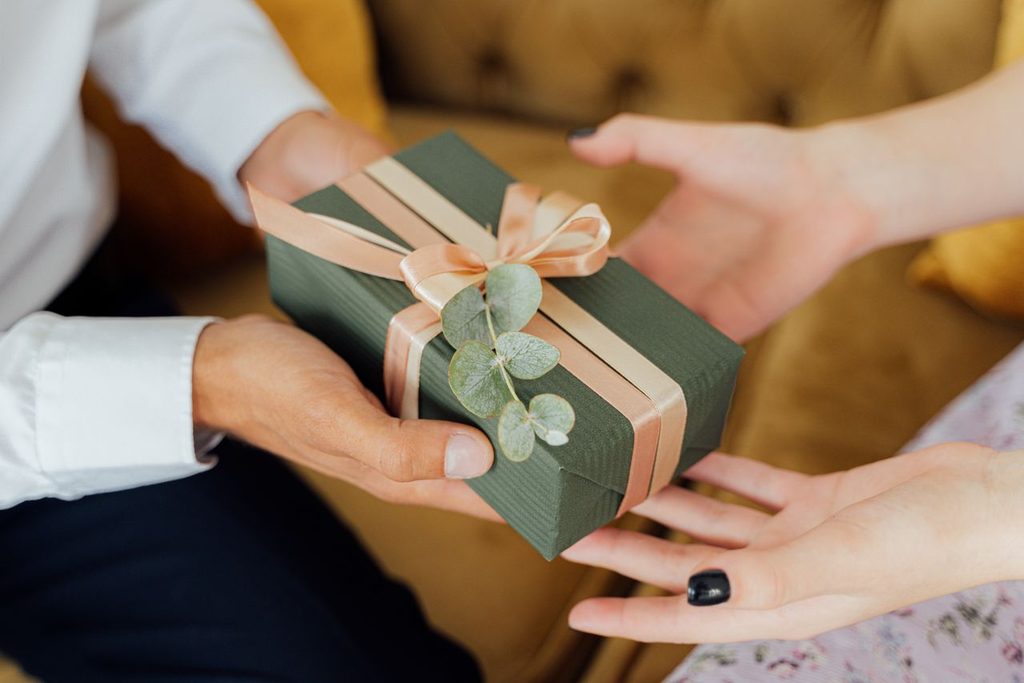
Offer it with both hands
Giving the package with both hands is a simple sign of attentiveness and respect.
You could say:
Honno kimochi desu.
“It is just a small token.”
However, speaking Japanese is not required. A sincere thank-you and a brief explanation of the gift will be appreciated.
If your visit is professional rather than social, our guide to business gift etiquette in Japan covers workplace expectations in more detail.
Do not expect it to be opened immediately
Your host may thank you and set the gift aside to open later. This does not indicate a lack of interest or appreciation.
Avoid asking the host to open it unless they choose to do so.
Remember to remove your shoes
Remove your shoes at the entrance and follow your host’s guidance about indoor slippers. Avoid stepping onto the raised interior floor while still wearing outdoor shoes.
Slippers are usually removed before stepping onto tatami, and separate slippers may be provided for the bathroom.
The Japan National Tourism Organization provides a useful introduction to Japanese manners and indoor etiquette.
What Gifts Should You Avoid?
Unless you know your host’s preferences well, avoid:
- Unusually expensive gifts
- Knives, scissors or other sharp objects
- Lighters and other fire-related items
- Gifts arranged in sets of four
- Strongly scented candles or fragrances
- Large decorative objects
- Funeral-associated flowers
- Unlabelled homemade food
- Restricted meat, fruit, vegetables or plant products
- Gifts requiring significant storage, care or maintenance
Some traditional associations may matter more in formal situations or to older recipients than they do in everyday life. Not every Japanese person follows the same customs.
When uncertain, a modest box of regional sweets is usually safer than a highly symbolic gift. Our guide to gifts that can cause offence across cultures explains some of the symbolism behind commonly misunderstood choices.
Frequently Asked Questions
Final Thoughts
The best gift for a Japanese host or host family is not necessarily expensive or traditionally Japanese. A modest, beautifully presented item that reflects your home region is often more personal.
If you are uncertain, choose shareable sweets, tea, coffee or another shelf-stable specialty. Wrap it carefully, present it with both hands and explain briefly why you selected it.
Your hosts are unlikely to expect flawless knowledge of Japanese etiquette. Thoughtfulness, flexibility and sincere appreciation will matter far more than performing every custom perfectly.
Sources and Further Reading
- Japan National Tourism Organization – Japanese gifting culture
- Japan National Tourism Organization – Staying with a host family
- SBS Cultural Atlas – Japanese etiquette
- Japan House – Furoshiki wrapping
- Japan Ministry of Agriculture, Forestry and Fisheries – Plant quarantine
- Japan Animal Quarantine Service – Bringing animal products into Japan
- Japan National Tourism Organization – Japanese manners and etiquette
About the Author
Clara Rosen is the editorial pen name of the founder of The Gifting Edge. Originally from Austria and now based in Australia, she researches international gifting traditions, etiquette and symbolism using official, academic and locally informed sources.